 English
 русский
 Español
 عربى
عربى
Compatible with Mercedes-Benz GLA models from 2015 to 2020, HP011 Front Shock Absorber Buf...
HP001 Front Shock Absorber Bump Stop is a polyurethane (PU) component designed to provide ...
.jpg "HP001 Front Shock Absorber Bump Stop for Chevrolet")
HP001 Front Shock Absorber Bump Stop is a polyurethane (PU) component designed to provide ...
.jpg "HP002 Front Suspension Struts Components-Bumper for Chevrolet")
HP002 Front Suspension Struts Components-Bumper is a polyurethane (PU) part designed to su...
.jpg "HP003 Front Suspension Strut Bumper for Buick")
HP003 Front Suspension Strut Bumper is designed for use in the front suspension system of ...
.jpg "HP011 Front Shock Absorber Buffer for Mercedes-Benz")
Compatible with Mercedes-Benz GLA models from 2015 to 2020, HP011 Front Shock Absorber Buf...
.jpg "HP012 Front Shock Absorber Auxiliary Spring Bump Stop for Mercedes-Benz")
Compatible with Mercedes-Benz Vito models from 1996 to 2003, HP012 Front Shock Absorber Au...

The primary performance difference between a short-stroke Absorber Bump Stop and a long-stroke Absorber Bump Stop is their ability to manage suspension compression range and energy absorption behavior. A short-stroke Absorber Bump Stop delivers faster engagement and higher initial resistance but of...
READ MOREThe standard Suspension Bump Stop generally feels firmer and engages more abruptly, while a microcellular Suspension Bump Stop provides a smoother, more progressive compression that improves ride comfort on rough roads and during suspension bottom-out. In practical terms, a microcellular bump stop ...
READ MOREWhen comparing a standard rubber Automotive Front Bump Stop with a heavy-duty reinforced Automotive Front Bump Stop, the reinforced version provides superior long-term suspension protection. While standard rubber is adequate for daily driving and light loads, heavy-duty reinforced options excel und...
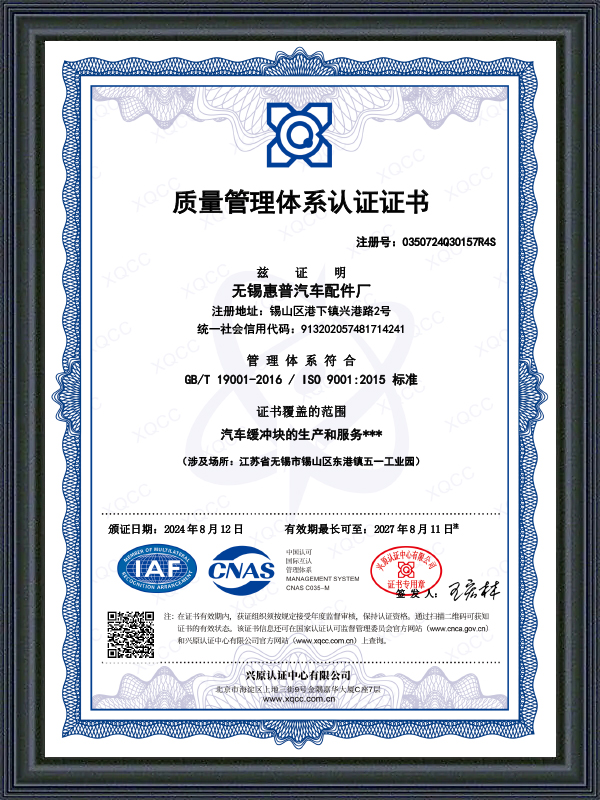
READ MOREAs a critical component in the automotive suspension system, the Mercedes-Benz shock absorber bump stop plays an essential role in ensuring ride comfort, extending the life of the shock absorber, and improving overall vehicle safety. Established in 2001, Wuxi Huipu Auto Parts Co., Ltd. has extensive experience in designing and manufacturing bump stops and dust covers, offering high-quality products for both OEMs and the aftermarket. We are committed to innovation and technology to meet the evolving needs of the market and deliver reliable solutions for our customers.
The material selection for Mercedes-Benz shock absorber bump stops is crucial for their performance. These bump stops must offer sufficient elasticity to absorb impacts and withstand high temperatures, aging, and corrosion to ensure long-term stability under various driving conditions. Below, we will analyze several common materials used in Mercedes-Benz bump stops and their respective advantages and disadvantages.
1. Rubber
Rubber is one of the most common materials used in shock absorber bump stops, especially in mid-range and economy models. The rubber used in Mercedes-Benz models typically has high elasticity and cushioning properties, making it effective at absorbing road shocks and improving ride comfort.
Advantages:
Disadvantages:
At Wuxi Huipu Auto Parts Co., Ltd., we carefully select rubber materials that meet industry standards and use advanced manufacturing techniques to ensure high-quality, durable products. Our bump stops are especially well-suited for Mercedes-Benz vehicles, offering excellent performance in terms of temperature and aging resistance.
2. Polyurethane
Polyurethane is a high-performance synthetic material known for its exceptional mechanical strength and elasticity. It is widely used in bump stops for high-end models, including some Mercedes-Benz vehicles, where precision handling and a more comfortable driving experience are priorities.
Advantages:
Disadvantages:
At Wuxi Huipu Auto Parts Co., Ltd., we offer customized polyurethane bump stops for customers who require high-performance solutions for Mercedes-Benz and other premium vehicles. Our polyurethane bump stops are manufactured to meet the demanding standards of high-end models.
3. Silicone Rubber
Silicone rubber is a high-performance material known for its exceptional temperature stability, making it ideal for vehicles operating in extreme heat or cold. Some Mercedes-Benz models, particularly those designed for harsh climates, use silicone rubber for their bump stops.
Advantages:
Disadvantages:
Despite its higher cost, Wuxi Huipu Auto Parts Co., Ltd. provides custom silicone rubber bump stops designed for Mercedes-Benz models operating in extreme climates. These bump stops maintain their performance even in the most challenging conditions.
4. Composite Materials
In recent years, composite materials, such as rubber-metal or polyurethane-fiber combinations, have gained popularity in shock absorber bump stops. Composites combine the advantages of multiple materials, enhancing strength while reducing weight and improving cushioning performance.
Advantages:
Disadvantages:
At Wuxi Huipu Auto Parts Co., Ltd., we continuously innovate in composite materials to provide high-performance bump stops for Mercedes-Benz and other high-end vehicle brands. Our composite bump stops are designed to meet the unique needs of premium vehicles, offering superior durability and performance.
Mercedes-Benz shock absorber bump stops play a critical role in automotive suspension systems. They absorb shock forces and protect the shock absorbers from excessive pressure. However, due to differences in vehicle weight, suspension system design, driving needs, and environmental factors, the design, materials, and performance requirements of these bump stops vary across different Mercedes-Benz models. This article explores these differences and how to choose the right bump stop product for different models.
1. Mercedes-Benz Sedans (C-Class, E-Class, S-Class)
The sedan series from Mercedes-Benz, including the C-Class, E-Class, and S-Class, is primarily designed for comfort and handling. The bump stops in these models generally use rubber or polyurethane materials that offer high elasticity and moderate hardness, aiming to provide a smooth driving experience.
C-Class and E-Class Bump Stop Characteristics:
Comfort Prioritized: The bump stops in C-Class and E-Class models are typically designed to be softer, optimizing shock absorption and ensuring a smooth ride for everyday driving. Compared to other models, these sedan bump stops have a moderate hardness, reducing vibrations inside the cabin.
Material Choice: To balance durability and cost, C-Class and E-Class bump stops mostly use high-quality rubber or moderately hard polyurethane materials. These materials offer excellent elasticity and good resistance to aging and UV radiation, making them adaptable to different climates.
S-Class Bump Stop Characteristics:
High Performance and Comfort Combined: As the high-end sedan of the Mercedes-Benz lineup, the S-Class requires bump stops that balance supreme comfort with precise handling. These models typically use polyurethane or composite materials for their bump stops, ensuring precise shock control while maintaining long-term stability and comfort.
Durability: Given the higher speeds and performance requirements of the S-Class, the bump stops need to offer greater compression strength and a longer lifespan. This is particularly crucial during long-distance driving or high-speed operation, where the performance of the bump stops is vital.
At Wuxi Huipu Auto Parts Co., Ltd., we provide bump stops for the Mercedes-Benz sedan lineup (including C-Class, E-Class, and S-Class) that undergo rigorous testing and quality control. Our rubber and polyurethane bump stops not only deliver excellent shock absorption but also remain stable under various climatic conditions.
2. Mercedes-Benz SUVs (GLK, GLS, GLE)
Mercedes-Benz's SUV lineup, including the GLK, GLS, and GLE, is renowned for its off-road capabilities and high ground clearance. The bump stops in these models typically require higher hardness and wear resistance to handle rough terrains and uneven surfaces.
GLK, GLE, and GLS Bump Stop Characteristics:
Higher Hardness: Since SUVs typically carry heavier loads and need to handle more variable terrain, their bump stops need to offer greater hardness and compression resistance. Compared to sedans, the bump stops in these models are made from harder polyurethane or composite materials to enhance durability and shock resistance.
Durability and Corrosion Resistance: Given the varied terrains that Mercedes-Benz SUVs are designed to traverse, their bump stops must prioritize corrosion resistance and aging resistance. High-quality polyurethane and composite materials provide extra protection, ensuring that the bump stops perform consistently on muddy, sandy, or rocky surfaces.
Off-Road Capabilities:
Specialized Design: For Mercedes-Benz's off-road vehicles, such as the GLS and GLE, the bump stops are designed to enhance both ride comfort and ground clearance. These bump stops often use more elastic rubber or composite materials to reduce vibration and improve stability during off-road travel.
At Wuxi Huipu Auto Parts Co., Ltd., the bump stops we supply for the Mercedes-Benz SUV range are designed to improve vehicle handling and comfort in complex terrains. Our bump stops are engineered to handle heavier loads and perform in tougher environments, ensuring that the vehicle maintains optimal performance under various conditions.
3. Mercedes-Benz Performance and High-Performance Models (AMG Series)
Mercedes-Benz's AMG series and other high-performance models (such as the AMG GT, A45, C63) emphasize speed, handling, and driving dynamics. To handle high-speed driving and intense performance, these models require bump stops with precise control and excellent high-temperature resistance.
AMG Series Bump Stop Characteristics:
Higher Hardness and Precision: The bump stops in AMG models are typically made from higher hardness polyurethane or composite materials, providing precise shock control at high speeds. These bump stops help to prevent excessive vibration and enhance stability and handling at high speeds.
High-Temperature Resistance: High-performance vehicles need bump stops that can withstand higher temperatures, especially during intense driving or track conditions. Polyurethane and silicone materials are commonly used in these models because they can endure high temperatures and prolonged thermal load.
Sports Suspension Systems:
Sporty Suspension Systems: AMG models feature more advanced sports suspension systems, where bump stops play a crucial role in maintaining precise shock control. These bump stops are designed to have a higher compression strength and wear resistance, ensuring that the vehicle remains stable during high-speed driving and sharp cornering.
At Wuxi Huipu Auto Parts Co., Ltd., we offer custom bump stops for Mercedes-Benz performance models (such as the AMG series), made from advanced high-performance materials. Our bump stops ensure precise shock control even under extreme driving conditions, meeting the demands of high-performance drivers.
4. Mercedes-Benz Commercial Vehicles and Vans (Sprinter, Vito)
Mercedes-Benz's commercial vehicles and vans, such as the Sprinter and Vito, are designed for long-distance transport and high-load operations. Therefore, the bump stops in these models require enhanced load-bearing capacity and long-term stability.
Commercial Vehicle and Van Bump Stop Characteristics:
Ultra-High Load Capacity: These vehicles often carry heavier loads, so their bump stops must be able to handle greater weight and provide additional shock absorption. Polyurethane and composite materials are typically used for these bump stops due to their excellent compression resistance and durability.
Long-Term Stability: Given the extended usage of commercial vehicles, the bump stops must maintain performance stability over long periods. This ensures that these vehicles continue to operate efficiently even under heavy load conditions.
At Wuxi Huipu Auto Parts Co., Ltd., we provide custom bump stops for commercial vehicles, ensuring that they can carry heavy loads while maintaining performance stability. Our bump stops are designed for extended use, helping commercial vehicles maintain optimal driving performance over time.
Shock absorber bump stops are key components in a vehicle's suspension system, designed to absorb shock loads, reduce excessive stress on the shock absorbers, and protect their internal structure. For Mercedes-Benz vehicles, known for their precision-engineered suspension systems, the correct installation of bump stops is crucial for optimal vehicle performance, comfort, and safety. Proper placement and orientation ensure that these components perform as intended, offering the best protection and efficiency.
As Wuxi Huipu Auto Parts Co., Ltd., we specialize in manufacturing high-quality bump stops for automotive shock absorbers, and our products are widely used in various Mercedes-Benz models. Our bump stops undergo rigorous testing to ensure they meet the highest standards. This article will provide an in-depth look at the correct position and direction for installing Mercedes-Benz shock absorber bump stops, offering valuable guidance for both professionals and car enthusiasts.
1. The Role and Importance of Proper Installation
Bump stops are typically placed between the suspension springs and shock absorbers, specifically designed to limit the shock absorber's travel, prevent it from over-compressing or extending, and protect its internal components from damage. Additionally, bump stops help enhance vehicle comfort by reducing vibrations and ensuring that shock absorbers don't bottom out under stress.
For Mercedes-Benz vehicles, which often feature more complex suspension systems compared to regular vehicles, the installation of the bump stop must be done with precision. Correct placement and orientation directly impact the effectiveness of the shock absorption, ensuring that the vehicle can absorb road impacts while maintaining performance and durability.
2. Installation Location of the Bump Stop
Bump stops are usually installed at either the upper or lower end of the suspension system, depending on the vehicle’s suspension design. For many Mercedes-Benz models, the bump stop is typically installed in two primary locations:
2.1 Upper End Between the Shock Absorber and Spring
In many Mercedes-Benz rear-wheel-drive and front-wheel-drive models, the bump stop is installed at the upper end between the shock absorber and the suspension spring. This configuration helps absorb the shock when the suspension reaches its maximum compression, such as when the vehicle undergoes sudden braking or hits large bumps. The bump stop’s role here is to dissipate the shock force and prevent excessive stress on the shock absorber.
For Mercedes-Benz C-Class, E-Class, and other similar models, the bump stop is installed at the upper end of the shock absorber, where it comes into direct contact with the shock absorber’s piston rod. The larger contact area between the bump stop and the shock absorber ensures effective shock dispersion, providing a smoother driving experience.
2.2 Lower End of the Suspension
For some Mercedes-Benz SUV models such as the GLS and GLE, the bump stop is installed at the lower end of the suspension, typically near the base of the spring or where the suspension meets the chassis. This positioning helps limit the spring's downward travel, preventing it from compressing too much and ensuring that the shock absorber doesn’t suffer from excessive compression during rough driving conditions.
For off-road capable models, the placement of the bump stop in the lower section is designed to improve the vehicle's ability to handle off-road terrain. The bump stop effectively absorbs impacts from rough surfaces, providing better support and comfort when driving through rugged environments.
3. The Direction of Installation for the Bump Stop
The orientation of the bump stop is crucial to ensuring that it functions effectively. Depending on the design of the bump stop, it may have a directional installation requirement. Generally, the following principles should be adhered to when installing the bump stop:
3.1 Directional Design
Certain high-performance Mercedes-Benz models, especially those equipped with air suspension or adaptive suspension systems, have bump stops that are directionally designed. These bump stops feature specific grooves or directional markings to ensure that they are installed in the correct orientation.
For example, Mercedes-Benz S-Class or AMG series models often use specially designed polyurethane bump stops, which are directional in nature. These bump stops may feature raised edges or guide slots, which should align with the shock absorber's piston rod or mount to ensure that the bump stop remains in place and provides maximum cushioning during suspension travel.
3.2 Avoiding Reversed Installation
Installing a bump stop in the wrong direction can significantly reduce its ability to absorb shock, and it may even cause premature failure of the part. It is essential to follow the manufacturer's guidelines for the correct orientation. Some bump stops are marked with arrows or other directional indicators to help guide proper installation.
At Wuxi Huipu Auto Parts Co., Ltd., each bump stop we produce comes with clear installation instructions, ensuring that the bump stop is positioned and oriented correctly for optimal performance.
4. Installation and Maintenance Tips for Bump Stops
To ensure long-lasting performance and efficiency, it’s important to follow these guidelines when installing and maintaining your bump stops:

 Add: Wuyi Industrial Park, Donggang Town, Wuxi, Jiangsu, China.
 +86-510-88350093
 [email protected]
 +86-510-88766081
Copyright © 2025 Wuxi Huipu Auto Parts Co., Ltd. All Rights Reserved.
 Wholesale Mercedes-Benz Shock Absorber Bump Stop Manufacturers
