 English
 русский
 Español
 عربى
عربى
HP027 Front Strut Bump Stop is designed for use in Volvo S40 (2004–2009), V50 (2005–2009),...
HP001 Front Shock Absorber Bump Stop is a polyurethane (PU) component designed to provide ...
.jpg "HP001 Front Shock Absorber Bump Stop for Chevrolet")
HP001 Front Shock Absorber Bump Stop is a polyurethane (PU) component designed to provide ...
.jpg "HP002 Front Suspension Struts Components-Bumper for Chevrolet")
HP002 Front Suspension Struts Components-Bumper is a polyurethane (PU) part designed to su...
.jpg "HP003 Front Suspension Strut Bumper for Buick")
HP003 Front Suspension Strut Bumper is designed for use in the front suspension system of ...
.jpg "HP027 Front Strut Bump Stop for Volvo")
HP027 Front Strut Bump Stop is designed for use in Volvo S40 (2004–2009), V50 (2005–2009),...
.jpg "HP028 Front Shock Absorber Bumper Spring for Volvo")
Designed for compatibility with select Volvo models, including the S60 (2010–), S80 (2006–...
Suspension Engineering — Explained A bump stop and a shock absorber are not the same thing. One is a passive cushion. The other is an active damper. Understanding the difference changes how you diagnose noise, budget for repairs, and read your suspension's true condition. Two Parts, Two Jobs A b...
READ MOREThe primary performance difference between a short-stroke Absorber Bump Stop and a long-stroke Absorber Bump Stop is their ability to manage suspension compression range and energy absorption behavior. A short-stroke Absorber Bump Stop delivers faster engagement and higher initial resistance but of...
READ MOREThe standard Suspension Bump Stop generally feels firmer and engages more abruptly, while a microcellular Suspension Bump Stop provides a smoother, more progressive compression that improves ride comfort on rough roads and during suspension bottom-out. In practical terms, a microcellular bump stop ...
READ MOREThe Volvo Shock absorber bump stop in a vehicle's suspension system ensures that the suspension will not be damaged or fail under excessive compression. Specifically, its functions include:
What are the installation steps or precautions when replacing a Volvo shock absorber bump stop?
Replacing a Volvo shock absorber bump stop typically involves the following steps. Specific procedures may vary depending on the vehicle model, but the general process is similar:
Installation Steps:
Prepare Tools and Materials:
Lift the Vehicle:
Use the jack to lift the vehicle, ensuring it is completely stable to prevent accidents during installation.
Remove the Tire and Shock Absorber:
To reach the shock absorber bump stop, the wheels need to be removed. Afterward, it may be necessary to remove the shock absorber or other components of the suspension system (depending on the vehicle model, this may involve removing the springs and control arms).
Remove the Old Bump Stop:
The old bump stop is usually installed on top or at the bottom of the shock absorber. 5. Install the new bump stop:
Install the new bump stop in the position of the shock absorber. Ensure it is securely fastened and correctly aligned. Some models may require glue or adhesive to secure the bump stop.
Reassemble the shock absorbers and suspension system:
After installing the bump stop, reinstall the shock absorbers, springs, and other suspension components in sequence. Ensure all screws and connections are tight and not loose.
Install the wheels and lower the vehicle:
Reinstall the tires and lower the vehicle back to the ground. Ensure all components are correctly assembled and no parts are loose.
Check functionality:
After installation, conduct a low-speed test drive to check the suspension system's operation, ensuring the new bump stop works effectively without abnormal noise or instability. #### Important Notes:
Choosing the Right Bump Stop: Choosing the right bump stop for your vehicle model is crucial. Incorrect models or sizes may not function effectively and could even damage other suspension components.
Inspecting the Shock Absorbers and Suspension System: When replacing the bump stop, it's best to inspect the shock absorbers and other suspension components to ensure there is no wear or damage, guaranteeing the overall system's health.
Safe Operation: During operation, ensure the vehicle is securely raised and use appropriate tools to prevent suspension components from falling and causing injury.
Checking the Post-Installation Effect: After replacing the bump stop, especially for owners of high-performance vehicles, it's best to have a professional suspension tuning performed to ensure the new bump stop works harmoniously with other suspension components.
How long do Volvo shock absorber bump stops typically last?
The lifespan of a shock absorber bump stop generally depends on several factors, including driving conditions, vehicle type, and maintenance. Under normal driving conditions, Volvo bump stops typically last 50,000 to 100,000 kilometers. However, if the vehicle is frequently driven in harsh road conditions or extreme weather, the lifespan may be shortened.
Factors affecting lifespan:
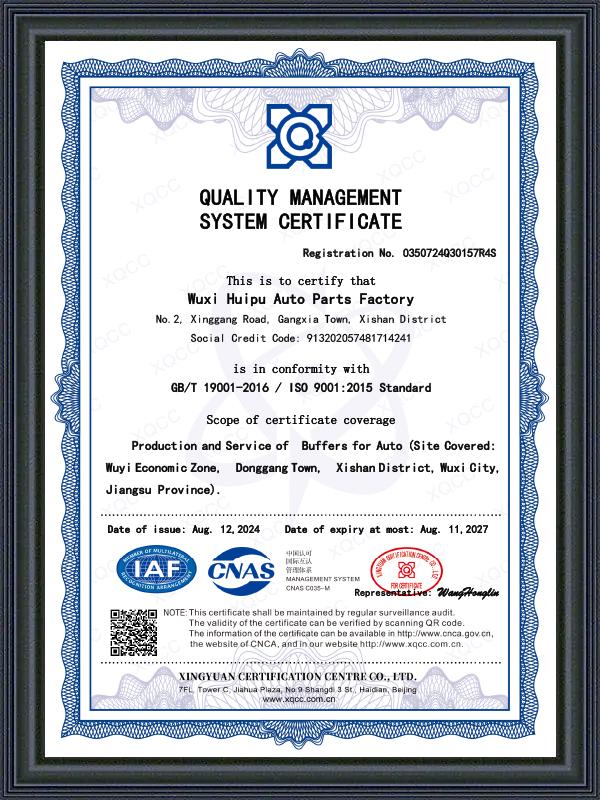
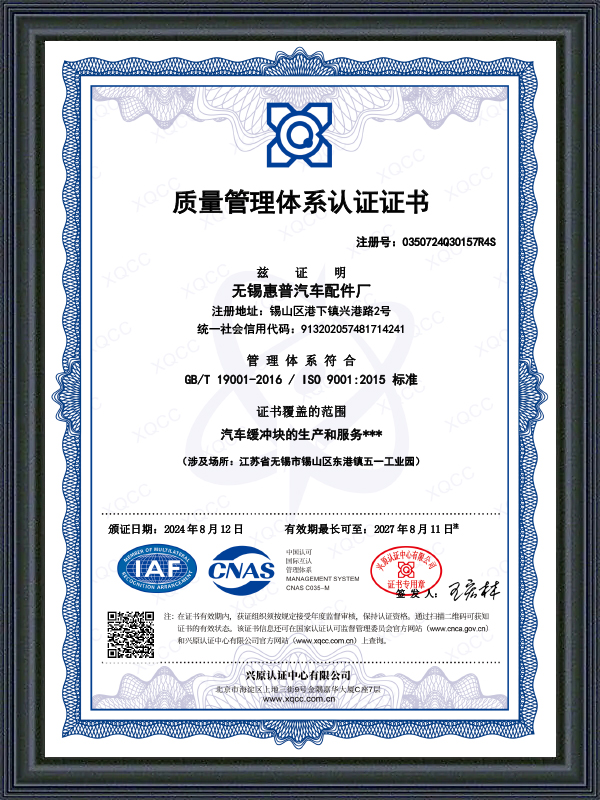
As Wuxi Huipu Auto Parts Co., Ltd., we have extensive experience in manufacturing automotive shock absorber bump stops and have supplied the market with over 3,000 different types of bump stop products. We place particular emphasis on product quality control to ensure our bump stops provide stable performance under various driving conditions, extending the lifespan of the vehicle's suspension system.
Founded in 2001, our company specializes in the production of bump stops for the automotive industry, possessing comprehensive production and testing equipment. In addition to standard bump stops, we also offer integrated solutions, such as combining bump stops with dust covers to form integrated maintenance kits. This comprehensive solution not only enhances the functionality of the bump stop but also improves its durability and reduces wear caused by external environmental factors.
Our collaborations with domestic OEMs and the aftermarket have ensured the quality and performance of our products, and we are actively expanding our business into international markets. We welcome inquiries from customers and partners worldwide for any related needs or questions, and we are committed to providing you with excellent products and services.
Therefore, for Volvo owners, choosing high-quality bump stops like those manufactured by Wuxi Huipu Auto Parts Co., Ltd. not only ensures a longer service life but also improves the overall durability and comfort of the suspension system. Regularly replacing aging or damaged bump stops and using proven, high-quality parts will help ensure the long-term performance and driving safety of your vehicle.

 Add: Wuyi Industrial Park, Donggang Town, Wuxi, Jiangsu, China.
 +86-510-88350093
 [email protected]
 +86-510-88766081
Copyright © 2025 Wuxi Huipu Auto Parts Co., Ltd. All Rights Reserved.
 Wholesale Volvo Shock Absorber Bump Stop Manufacturers
