 English
 русский
 Español
 عربى
عربى
HP042 Rear Rubber Bumper is a polyurethane (PU) component compatible with select Kia model...
HP001 Front Shock Absorber Bump Stop is a polyurethane (PU) component designed to provide ...
.jpg "HP001 Front Shock Absorber Bump Stop for Chevrolet")
HP001 Front Shock Absorber Bump Stop is a polyurethane (PU) component designed to provide ...
.jpg "HP002 Front Suspension Struts Components-Bumper for Chevrolet")
HP002 Front Suspension Struts Components-Bumper is a polyurethane (PU) part designed to su...
.jpg "HP003 Front Suspension Strut Bumper for Buick")
HP003 Front Suspension Strut Bumper is designed for use in the front suspension system of ...
-1.jpg "HP042 Rear Rubber Bumper for Kia")
HP042 Rear Rubber Bumper is a polyurethane (PU) component compatible with select Kia model...
-3.jpg "HP043 Front Shock Absorber Jounce Bumper for Kia")
HP043 Front Shock Absorber Jounce Bumper is a polyurethane component intended for use in t...

The primary performance difference between a short-stroke Absorber Bump Stop and a long-stroke Absorber Bump Stop is their ability to manage suspension compression range and energy absorption behavior. A short-stroke Absorber Bump Stop delivers faster engagement and higher initial resistance but of...
READ MOREThe standard Suspension Bump Stop generally feels firmer and engages more abruptly, while a microcellular Suspension Bump Stop provides a smoother, more progressive compression that improves ride comfort on rough roads and during suspension bottom-out. In practical terms, a microcellular bump stop ...
READ MOREWhen comparing a standard rubber Automotive Front Bump Stop with a heavy-duty reinforced Automotive Front Bump Stop, the reinforced version provides superior long-term suspension protection. While standard rubber is adequate for daily driving and light loads, heavy-duty reinforced options excel und...
READ MOREThe global rise of Kia as a major automotive force is intrinsically linked to its commitment to quality, innovative design, and a dedication to superior driving dynamics. Every vehicle produced, from the economical commuter car to the luxury sedan and the rugged SUV, relies on a meticulously calibrated suspension system to deliver the expected levels of safety and passenger experience. Within this complex mechanical architecture, the Kia Shock Absorber Bump Stop occupies a position of understated importance. It is a highly engineered component that dictates the critical final millimeters of suspension travel, directly impacting the long term durability of the damper and the instantaneous sensation of ride comfort experienced by the driver and occupants. Understanding its function requires an appreciation for material science and dynamic load management.
The Mechanics of Progressive Damping
The fundamental purpose of the bump stop is to prevent structural and hydraulic damage to the automotive shock absorbers. This damage typically occurs when the suspension undergoes a sudden, violent compression event, such as hitting a deep pothole, traversing a speed bump too quickly, or encountering an extreme dip during spirited driving. Without adequate protection, the shock absorber’s piston rod would forcefully strike the metal body of the damper unit, an event known as "bottoming out." This hard metallic contact generates immense shock forces that are transmitted directly into the chassis and passenger cabin, causing noise, discomfort, and, most importantly, instantaneous damage to the sensitive seals, internal valves, and oil chambers of the shock absorber.
The Kia Shock Absorber Bump Stop mitigates this failure mode by acting as a progressive spring. Unlike traditional, simple elastic stops, a modern bump stop is designed to exhibit a non linear force deflection curve. This means its resistance to compression increases gradually and exponentially as the piston rod pushes deeper into it. This characteristic ensures that the vehicle's kinetic energy is absorbed in a controlled, progressive manner, converting a destructive high energy impact into a managed deceleration. This controlled rate of force application safeguards the delicate internal components of the shock absorber, extending its operational life and maintaining the integrity of the entire suspension system. This highly tuned progressive action is essential for Kia vehicles, enabling them to maintain their acclaimed handling stability even under peak dynamic loads, thereby enhancing durability far beyond what an unmanaged collision would allow.
The Material Superiority of Microcellular Urethane
The efficacy and sustained performance of the Kia Shock Absorber Bump Stop are almost entirely dependent on the material used in its construction. The industry has moved decisively away from legacy materials like dense natural rubber towards advanced elastomers, specifically Microcellular Urethane, or MCU. This specialized Polyurethane composition is the core technological advancement in modern bump stop design. MCU is characterized by a microscopic, closed cell structure, where millions of minute air pockets are uniformly distributed throughout the polymer matrix.
When the bump stop is compressed, the air trapped within these closed cells is forced to rapidly compress, providing a pneumatic resistance that complements the elastic properties of the polymer itself. This pneumatic damping is the mechanism responsible for the desired progressive stiffness; the component starts soft to cushion minor movements but stiffens dramatically upon deeper compression. This enables precise tuning of the suspension's terminal stage, a critical factor for achieving optimal ride comfort. Furthermore, MCU exhibits superior material memory and resilience, allowing it to quickly and consistently return to its original form even after repeated, severe compression cycles, which is a testament to its exceptional durability.
Beyond mechanical performance, the chemical robustness of the chosen Polyurethane is vital. The operational environment of the bump stop is constantly challenging, involving sustained exposure to road grime, abrasive grit, corrosive road salts, high temperatures generated by braking, and splashes of oil and chemical contaminants. High specification MCU is engineered to be highly resistant to environmental degradation, including resistance to ozone and UV exposure, which typically cause standard rubber components to harden, crack, and fail prematurely. This chemical stability ensures that the bump stop maintains its engineered density and progressive damping characteristics throughout its long service life, a non negotiable requirement for guaranteeing consistent vehicle safety and the intended ride comfort level of the Kia suspension system.
The success of a global automotive brand like Kia is supported not only by its initial build quality but also by the robust quality of its parts supply chain, particularly for the aftermarket. The replacement components market, though highly competitive, demands unwavering adherence to the stringent technical specifications established by the original equipment manufacturers, or OEMs. The Kia Shock Absorber Bump Stop serves as a perfect example of a small part with enormous implications for vehicle handling, safety, and repair efficiency. For parts manufacturers, success in this domain is measured by geometric precision, material consistency, and the strategic development of comprehensive repair solutions.
The Necessity of Uncompromising Manufacturing Precision
The design of the Kia Shock Absorber Bump Stop is never generic; it is meticulously tailored to the specific characteristics of each Kia model. Factors such as the vehicle’s intended gross weight, the total available suspension travel, and the damping rate of the shock absorber all dictate the precise dimensions and density required for the bump stop. Therefore, any replacement part, whether supplied to OEMs or the aftermarket, must replicate the original design with absolute fidelity. Incorrect dimensions, such as a bump stop that is slightly too stiff or too long, can unnecessarily restrict the suspension's effective range of motion, resulting in a constantly firm and potentially uncomfortable ride comfort. Conversely, a bump stop that is too soft or short compromises the essential bottoming out protection, leading to severe damage to the automotive shock absorbers.
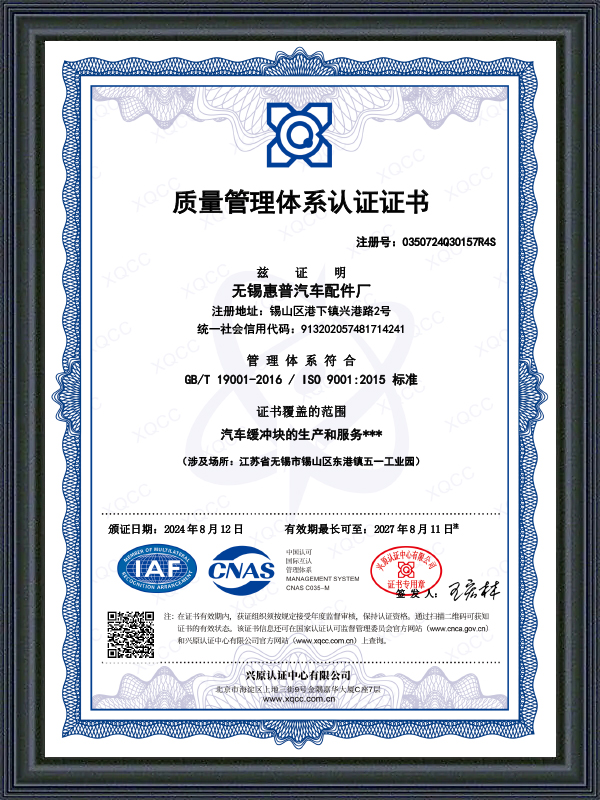
This critical requirement for precision manufacturing necessitates deep specialization and targeted expertise. Manufacturers dedicated to elastomeric suspension components invest heavily in process control, advanced molding techniques, and material formulation to ensure batch to batch consistency. Founded in 2001, Wuxi Huipu Auto Parts Co., Ltd. specializes in manufacturing bump stops for automotive shock absorbers. As a professional China Kia Shock Absorber Bump Stop Manufacturers and Kia Shock Absorber Bump Stop Factory, they have built a diverse portfolio of over 3,000 products. This level of specialization allows a focused approach to quality control, guaranteeing that every bump stop meets the exact operational requirements needed for optimal durability and performance in the demanding Kia suspension system.
The Strategic Value of Integrated Repair Kits
The labor and expense involved in replacing automotive shock absorbers make it a repair job where efficiency and comprehensive coverage are paramount. Modern service standards dictate that when a shock absorber is replaced, associated wear components should be replaced concurrently to ensure the longevity of the new unit. The two most critical associated parts are the bump stop and the dust cover. The dust cover, typically a flexible plastic or thermoplastic shield, protects the shock absorber's crucial piston rod seal from constant bombardment by abrasive road grit and moisture. A compromise in the dust cover leads inevitably to seal damage, fluid leakage, and the eventual failure of the new shock absorber.
Recognizing this critical synergy, industry leaders are increasingly offering integrated repair kits. These solutions strategically bundle the precisely manufactured Kia Shock Absorber Bump Stop with the corresponding high quality dust cover into a single package. This comprehensive approach provides significant advantages to the aftermarket: it simplifies the inventory process for repair facilities, ensures that the mechanic has all necessary components for a complete, factory specification repair, and most importantly, guarantees maximum durability for the newly installed shock absorber. By protecting against both catastrophic impact failure via the bump stop and environmental contamination via the dust cover, these kits provide a complete maintenance solution. This strategic product offering represents a clear commitment to customer service and product quality, solidifying the manufacturer’s position as a preferred supplier among both OEMs and the global aftermarket. The provision of these integrated repair kits ultimately contributes to maintaining the safety and intended ride comfort of Kia vehicles worldwide.

 Add: Wuyi Industrial Park, Donggang Town, Wuxi, Jiangsu, China.
 +86-510-88350093
 [email protected]
 +86-510-88766081
Copyright © 2025 Wuxi Huipu Auto Parts Co., Ltd. All Rights Reserved.
 Wholesale Kia Shock Absorber Bump Stop Manufacturers
