 English
 русский
 Español
 عربى
عربى

Role in Limiting Suspension Travel and Preventing Bottoming-Out
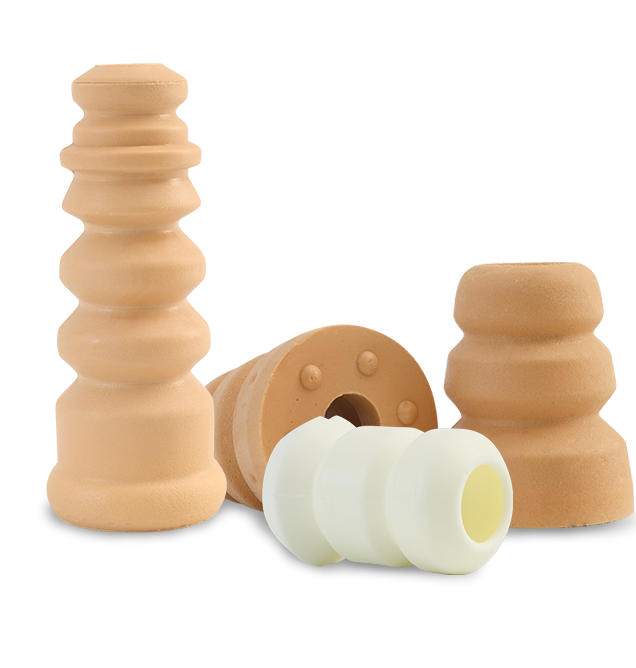
The primary function of the Land Rover Front/Rear Shock Absorber Bump Stop is to act as a mechanical limit for suspension compression, preventing full-bottoming of the shock absorber during extreme conditions. In off-road scenarios or under heavy loads, suspension components are subjected to sudden, high-energy compressive forces that could cause metal-to-metal contact between the shock absorber and chassis, leading to structural damage or reduced suspension performance. The bump stop progressively absorbs and distributes these forces, ensuring that the suspension compresses safely without transferring excessive impact to other components. By defining a maximum compression limit, the bump stop protects the shock absorber, springs, and associated suspension linkages while maintaining predictable handling characteristics and preventing abrupt jolts that could compromise passenger comfort or vehicle stability.
Impact on Ride Comfort Across Light, Medium, and Heavy Loads
Ride comfort is closely linked to how the suspension system responds to varying vehicle loads. Under light load conditions, the bump stop typically remains inactive, allowing the shock absorber and spring to operate within their standard travel range, delivering smooth, compliant handling over minor road irregularities. When the vehicle carries medium or heavy loads, such as passengers, cargo, or towing equipment, the bump stop engages earlier in the compression cycle. This engagement acts as a progressive cushion, absorbing excess energy and reducing the harshness of suspension bottoming. By smoothing out the transition from full compression to stabilization, the bump stop minimizes vibration, noise, and jolts transmitted to the cabin. Consequently, passengers experience consistent comfort regardless of load conditions, while the vehicle maintains structural integrity and predictable handling.
Progressive Energy Absorption and Suspension Protection
The Land Rover bump stop is constructed from high-density polyurethane, rubber, or composite polymers engineered to provide progressive compression resistance. During minor suspension deflections, the bump stop remains inactive, allowing the spring and shock absorber to manage normal road irregularities. As the suspension nears maximum compression under high-impact or heavy-load conditions, the bump stop begins to compress, absorbing a portion of the kinetic energy and reducing the force transmitted to the shock absorber and chassis. This progressive damping effect protects suspension components from over-stressing and reduces wear and fatigue over time. The ability to dissipate energy gradually also contributes to improved ride smoothness during off-road driving, where uneven terrain can otherwise result in sharp impacts and uncomfortable jolts.
Effects on Vehicle Handling and Stability
The bump stop’s engagement directly influences vehicle dynamics and handling characteristics. By preventing excessive suspension compression, it ensures that the tires maintain consistent contact with the ground, improving traction, steering response, and overall stability. In situations involving aggressive cornering, sudden maneuvers, or off-road obstacles, the bump stop prevents the suspension from over-compressing, which could otherwise cause roll, dive, or unpredictable chassis movement. It helps preserve proper suspension geometry, including camber and caster angles, ensuring that the vehicle handles predictably across a wide range of load conditions. This contributes not only to driver confidence but also to safety, particularly during extreme driving or towing scenarios.
Adaptability to Different Suspension Configurations
Modern Land Rover models feature coil, air, and adaptive suspension systems, each requiring precise interaction with the bump stop. The bump stop is designed to integrate with these systems, ensuring consistent energy absorption and compression limits regardless of load or adaptive suspension setting. For example, air suspension can adjust ride height and stiffness, but the bump stop still provides a mechanical safeguard against bottoming-out during extreme compression. Proper bump stop engagement maintains consistent damping characteristics and prevents suspension over-extension or damage. This adaptability allows for consistent ride quality, handling, and component longevity, whether the vehicle is unloaded on city roads, fully loaded with cargo, or navigating rugged off-road trails.
.jpg "HP021 Front Shock Absorber Bump Spring for Land Rover")
.jpg "HP022 Rear Shock Absorber Bumper for Land Rover")
.jpg "HP012 Front Shock Absorber Auxiliary Spring Bump Stop for Mercedes-Benz")
-1.jpg "HP037 Front Shock Absorber Bump Stop for Mitsubishi")
.jpg "HP032 Front Shock Absorber Bump Stop for Honda")
.jpg "HP023 Front Shock Absorber Damper Bump Stop for Peugeot")
-3.jpg "Are Automotive Bump Stops Necessary? A Comprehensive Guide to Function, Types, and Replacement")
-1.jpg "What is a bump stop in a car, and what is its function in a vehicle's suspension system?")
.jpg "Peugeot Shock Absorber Bump Stop: Function, Replacement, and Common Issues")



