 English
 русский
 Español
 عربى
عربى

The polyurethane Suspension Bump Stop significantly outperforms a rubber one under extreme loads. Polyurethane resists permanent deformation, maintains its structural integrity across repeated high-force compression cycles, and holds up better against heat, oil, and chemical exposure. Rubber bump stops, while adequate for light to moderate use, tend to crack, flatten, and lose their energy-absorbing properties much faster when subjected to sustained or severe loading — such as in towing, off-road driving, or performance applications.
Why Extreme Loads Are the Real Test for a Suspension Bump Stop
Under normal driving conditions, a Suspension Bump Stop is rarely engaged at full compression. It sits passively in the suspension assembly, contacted only briefly during large bumps. But in extreme-load scenarios — heavy payloads, aggressive off-road terrain, repeated track-day impacts, or consistent towing near maximum capacity — the bump stop becomes a primary load-bearing component rather than an occasional buffer.
In these conditions, the bump stop can experience compressive forces exceeding 5,000–10,000 N repeatedly in a single driving session. This is where material choice stops being a preference and starts being a durability decision. The difference between polyurethane and rubber becomes measurable in both performance and service life.
How Polyurethane Handles High-Load Compression
Polyurethane is a thermoset polymer with a cross-linked molecular structure that makes it exceptionally resistant to compression set — the permanent deformation that occurs when a material is compressed and fails to fully recover its original shape. In a Suspension Bump Stop application, this property is critical.
Compression Set Resistance
A high-quality polyurethane Suspension Bump Stop typically shows a compression set value of under 15% after 22 hours at 70°C under standard ASTM D395 testing conditions. By comparison, a natural rubber bump stop often registers compression set values of 25–40% under the same conditions. In practical terms, this means a rubber bump stop loses a significant portion of its thickness and spring-back ability after prolonged or repeated extreme loading, while a polyurethane unit largely retains its geometry.
Tensile Strength and Tear Resistance
Polyurethane used in Suspension Bump Stop manufacturing typically has a tensile strength of 30–55 MPa, compared to 10–20 MPa for standard rubber compounds. Tear strength in polyurethane can reach 80–150 kN/m, versus 20–50 kN/m in rubber. These figures translate directly to resistance against splitting, edge tearing, and surface degradation under impact — all of which are common failure modes in bump stops subjected to extreme repeated loading.
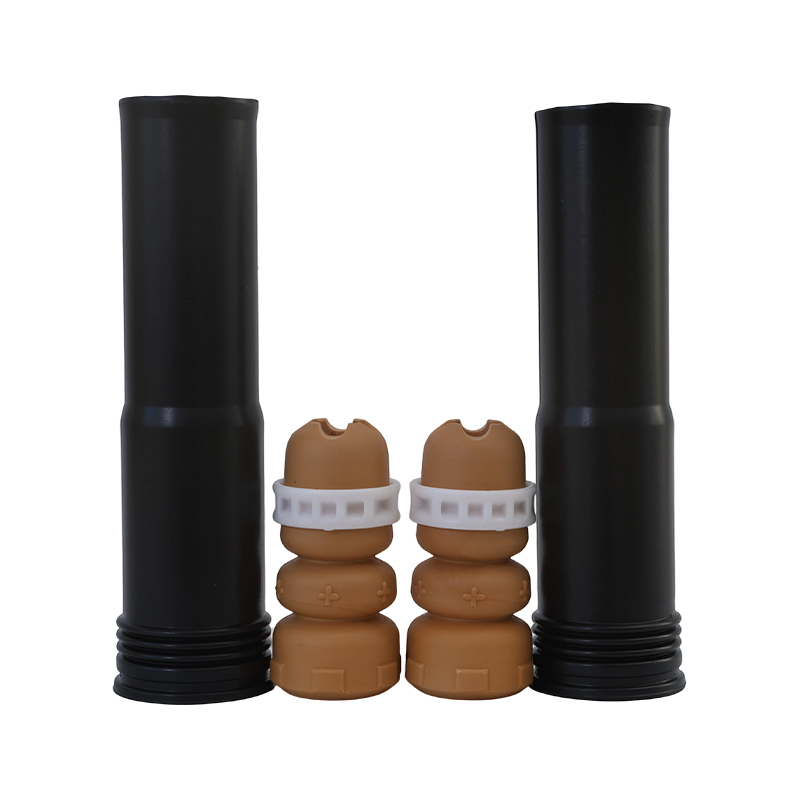
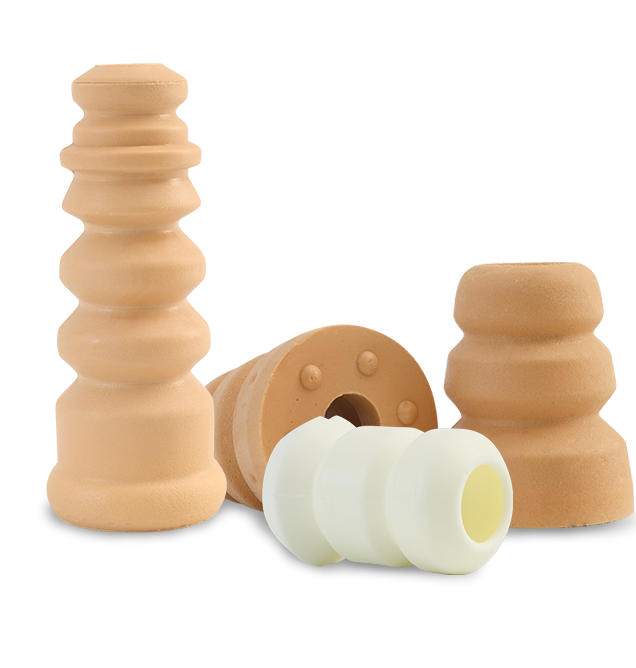
Suspension Bump Stop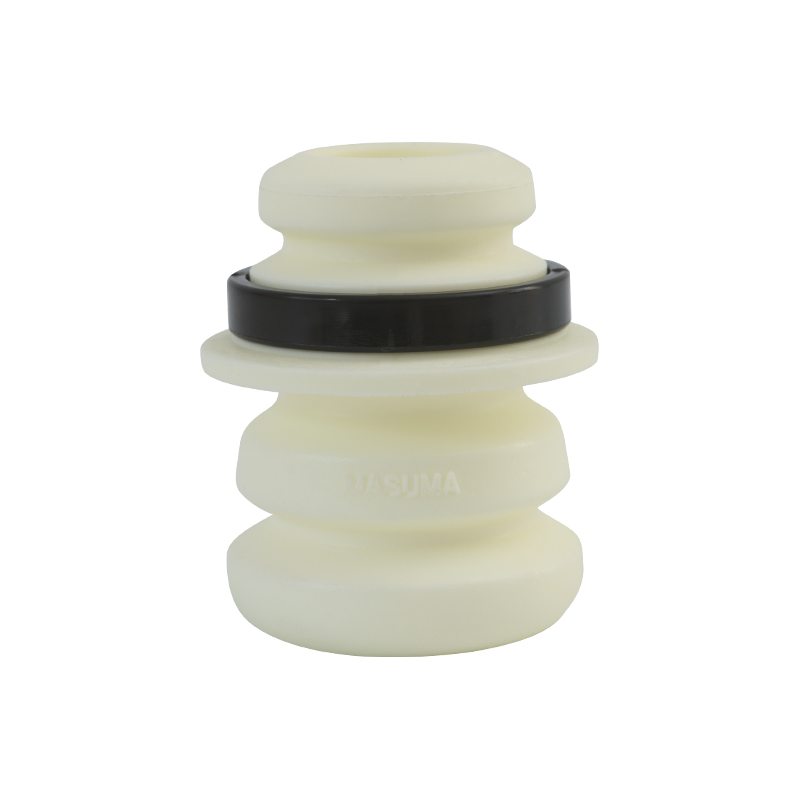
How Rubber Degrades Under Extreme Load Conditions
Rubber — whether natural, EPDM, or NBR — is a viscoelastic material. It has good energy absorption at moderate loads, but its durability degrades noticeably when exposed to the combination of high mechanical stress, heat, and chemical contamination that characterizes extreme-load environments.
- Thermal degradation: Rubber begins to lose elasticity and develop surface cracking when exposed to sustained temperatures above 80–90°C. In wheel-well environments during aggressive driving, temperatures can reach 100°C or higher, accelerating oxidation and hardening of the rubber compound.
- Chemical exposure: Road oils, brake fluid splatter, and fuel residue attack rubber polymers over time. Natural rubber in particular is vulnerable to hydrocarbon-based fluids, which cause swelling, softening, and structural breakdown. EPDM offers better chemical resistance but still falls short of polyurethane in prolonged exposure scenarios.
- Fatigue cracking: Repeated extreme compression cycles cause microcracks to form at the surface and propagate inward. A rubber Suspension Bump Stop in a heavy-duty towing application may show visible cracking within 30,000–50,000 km of use, whereas a polyurethane equivalent under similar conditions typically survives 100,000 km or more without visible structural failure.
Direct Durability Comparison: Polyurethane vs Rubber Suspension Bump Stop
| Durability Factor | Polyurethane Bump Stop | Rubber Bump Stop |
|---|---|---|
| Compression Set (ASTM D395) | <15% at 70°C / 22 hrs | 25–40% at 70°C / 22 hrs |
| Tensile Strength | 30–55 MPa | 10–20 MPa |
| Tear Strength | 80–150 kN/m | 20–50 kN/m |
| Heat Resistance | Stable up to 120°C | Degrades above 80–90°C |
| Oil/Chemical Resistance | Excellent | Moderate (EPDM) to Poor (natural rubber) |
| Fatigue Life (Heavy-Duty Use) | 100,000+ km | 30,000–50,000 km |
| Abrasion Resistance | Very High | Moderate |
| Cost Per Unit (Approx.) | $15–$50 | $5–$25 |
Real-World Scenarios Where the Difference Is Most Pronounced
Towing and Payload Applications
Trucks and SUVs used for towing near their rated capacity place the rear Suspension Bump Stop under near-constant engagement during transit. In this environment, a rubber bump stop compresses repeatedly against the jounce bumper with little recovery time between contacts. After extended towing seasons, rubber units frequently show permanent height loss of 10–20 mm, reducing their effectiveness and altering suspension geometry. A polyurethane Suspension Bump Stop maintains its height and spring rate far more consistently across the same duty cycle.
Off-Road and Rock Crawling
Off-road use subjects a Suspension Bump Stop to sudden, high-magnitude impacts from uneven terrain. The combination of lateral shear forces and axial compression during articulation events creates multi-directional stress that rubber handles poorly. Polyurethane's superior abrasion resistance and higher tear strength make it a standard upgrade for off-road builds, where rubber bump stops can split or separate from their mounting sleeves within a single season of moderate trail use.
Track and Performance Driving
On a race or performance track, suspension compression events are frequent and high-speed. The heat generated in the suspension components — combined with aggressive cornering loads — pushes bump stop materials beyond their comfort zone. Rubber bump stops may overheat and soften mid-session, causing inconsistent handling behavior. Polyurethane maintains its durometer (hardness rating) far more reliably under thermal stress, providing consistent behavior lap after lap.
One Trade-Off to Consider: Ride Comfort at Low Loads
Despite its durability advantages, a polyurethane Suspension Bump Stop is not always the ideal choice for every vehicle. Polyurethane is stiffer than rubber at initial contact, which can transmit more harshness into the cabin during minor undulations where the bump stop is lightly engaged. Some drivers upgrading from rubber to polyurethane on a daily-driven vehicle report a noticeably firmer feel over small road imperfections.
For vehicles that prioritize ride comfort over extreme-load endurance — standard passenger sedans or light-duty crossovers — a microcellular foam Suspension Bump Stop may offer a better balance of durability and comfort than either polyurethane or rubber. Polyurethane is best reserved for applications where load capacity and longevity are the primary requirements.
For any application involving extreme loads — heavy towing, off-road use, performance driving, or sustained high-force compression — a polyurethane Suspension Bump Stop is the more durable and reliable choice over rubber. Its superior compression set resistance, tensile strength, thermal stability, and chemical resistance translate into a longer service life, more consistent performance, and better protection for surrounding suspension components. Rubber bump stops remain a cost-effective option for light-duty, standard-load vehicles, but they are not engineered to survive the conditions where durability matters most.
.jpg "HP017 Rear Suspension Bump Stop for Volkswagen")
.jpg "HP012 Front Shock Absorber Auxiliary Spring Bump Stop for Mercedes-Benz")
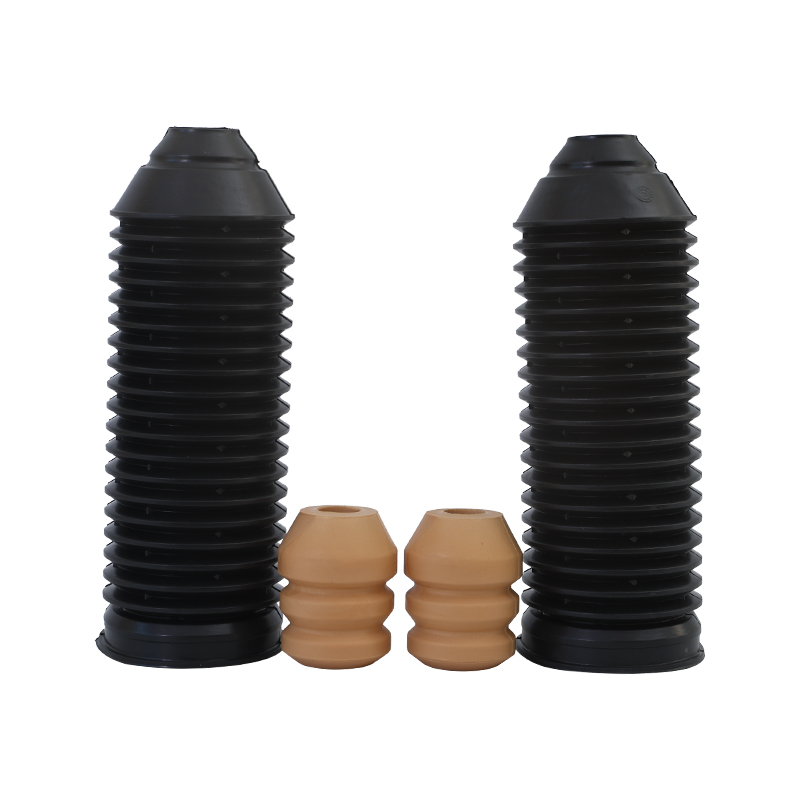
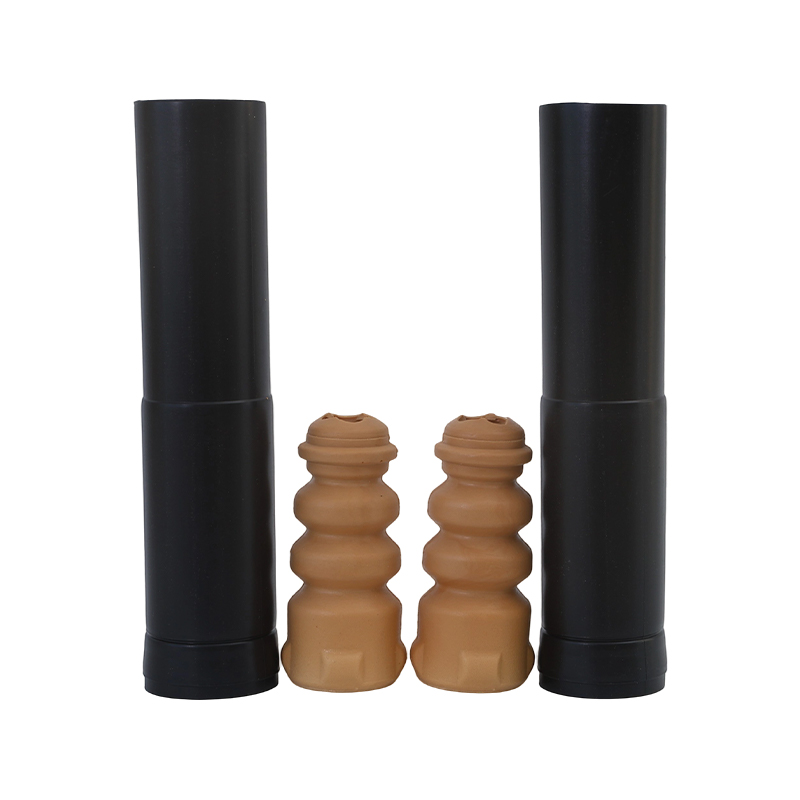
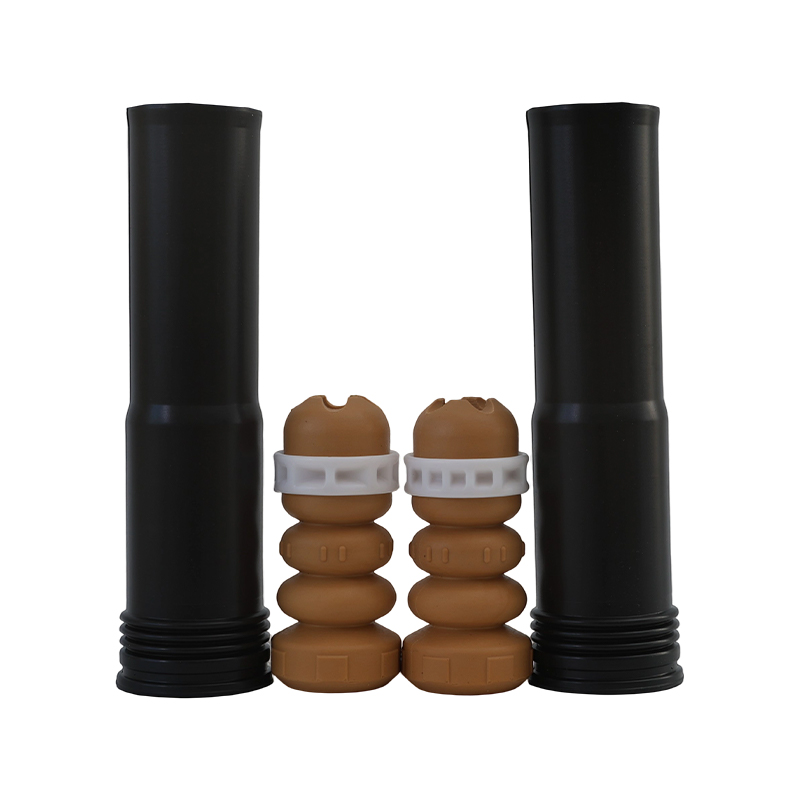
-3.jpg "Are Automotive Bump Stops Necessary? A Comprehensive Guide to Function, Types, and Replacement")
-1.jpg "What is a bump stop in a car, and what is its function in a vehicle's suspension system?")
.jpg "Peugeot Shock Absorber Bump Stop: Function, Replacement, and Common Issues")



