 English
 русский
 Español
 عربى
عربى
-
Progressive Energy Absorption and Cushioning:
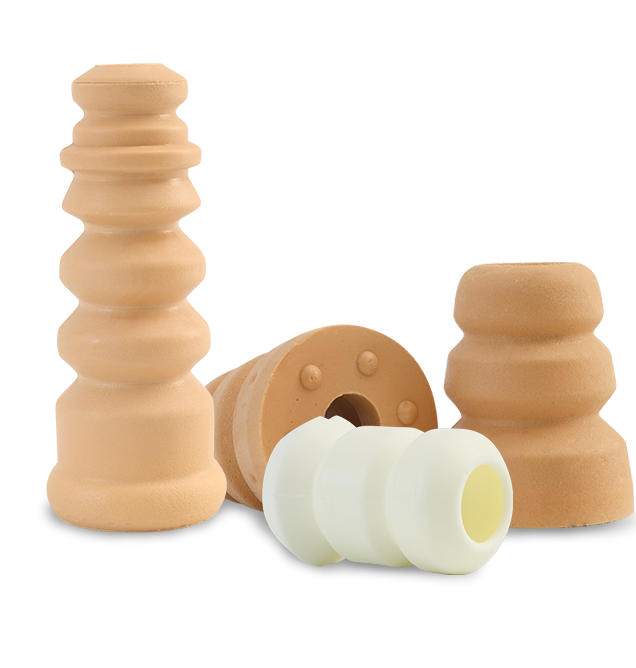
The Dodge Front/Rear Shock Absorber Bump Stop plays a critical role in managing the energy generated when the suspension reaches the end of its travel, particularly during high-impact events like hard braking, sharp cornering, or rough terrain. At the point where the shock absorber or strut is fully compressed, the bump stop engages to cushion the final stages of suspension compression, gradually decelerating the downward force. This progressive energy absorption prevents abrupt, jarring impacts that could otherwise be transferred directly into the vehicle chassis and cabin. As a result, the overall ride quality is significantly improved, especially in extreme driving conditions where the suspension is under maximum load. -
Load-Dependent Suspension Support:
As the load on the vehicle increases, either from added passengers, heavy cargo, or towing, the suspension system compresses more deeply. The bump stop provides a measured resistance that adapts to these varying load conditions. Under light loads, the bump stop may rarely engage, allowing the suspension to function freely and providing a smooth, comfortable ride. However, under heavier loads—such as when the vehicle is fully loaded or carrying a trailer—the bump stop comes into play more frequently, offering increased support and preventing the suspension from bottoming out. This helps to maintain the suspension's effective range and ensures that it operates within its optimal parameters without compromising comfort or performance. -
Enhanced Handling and Stability:
One of the primary functions of the Dodge Front/Rear Shock Absorber Bump Stop is to preserve suspension geometry during aggressive driving or when the vehicle is under maximum load. By engaging during high-compression moments, such as during cornering, braking, or navigating rough terrain, the bump stop helps to limit excessive suspension movement. This ensures that wheel alignment is maintained and that the tire contact patch stays consistent with the road surface, even when the vehicle is under stress. In turn, this increases vehicle stability by reducing body roll, sway, and bounce. As a result, the vehicle remains more balanced, especially during high-speed maneuvers or off-road conditions, providing the driver with better control and confidence. -
Reduction in Vibration and Road Noise:
Another significant benefit of the bump stop is its ability to dampen vibrations and noise generated during suspension movement. When the suspension is under stress—whether from road imperfections, uneven surfaces, or aggressive driving—the bump stop absorbs some of the high-frequency vibrations that would otherwise be transmitted into the cabin. The material composition of the bump stop, often made from durable rubber or polyurethane, is designed to compress and rebound smoothly, offering superior shock attenuation. As a result, road noise and vibration are reduced, contributing to a quieter and more comfortable cabin environment, even when driving over rough or unpaved surfaces. -
Protection of Suspension Components:
The bump stop’s role extends beyond comfort; it also provides critical protection to suspension components. Without a bump stop, shock absorbers, struts, and other suspension elements could be subjected to extreme forces during full compression, potentially causing damage or premature wear. The bump stop effectively prevents metal-to-metal contact between critical suspension parts, acting as a buffer that absorbs and redistributes forces to prevent shock absorber bottoming or damage to control arms, struts, and chassis components. This protection enhances the overall longevity and performance of the suspension system, ensuring that the vehicle’s handling, ride quality, and safety are maintained over time. -
Progressive Response to Load Variations:
The Dodge Front/Rear Shock Absorber Bump Stop is engineered to offer a progressive response to varying load conditions. At low loads, the bump stop is minimally engaged, allowing the vehicle to maintain a smooth, responsive ride. As the load increases—whether from added passengers, cargo, or increased suspension compression—the bump stop gradually engages with greater force, providing progressively stronger compression resistance. This ensures that the vehicle’s suspension system does not reach a hard stop too abruptly, which could cause discomfort or instability. By modulating the level of resistance based on the load, the bump stop ensures smooth transition between light and heavy load states, offering a balanced ride experience across a wide range of driving scenarios.
How does the Dodge Front/Rear Shock Absorber Bump Stop affect ride comfort and suspension performance under varying load conditions?
-
.jpg "HP001 Front Shock Absorber Bump Stop for Chevrolet")
HP001 Front Shock Absorber Bump Stop is a polyurethane (PU) component designed to provide a cushioning effect for the front suspension system of compatible Chevrolet vehicles. The block measures φ57.5...
See Details -
.jpg "HP012 Front Shock Absorber Auxiliary Spring Bump Stop for Mercedes-Benz")
Compatible with Mercedes-Benz Vito models from 1996 to 2003, HP012 Front Shock Absorber Auxiliary Spring Bump Stop is designed to fit the front suspension system.It protects the structural integrity o...
See Details -
-1.jpg "HP037 Front Shock Absorber Bump Stop for Mitsubishi")
HP037 Front Shock Absorber Bump Stop is a polyurethane component designed for use in the front suspension system of Mitsubishi Lancer models from 2000 to 2013 and Mitsubishi Outlander models from 2002...
See Details -
.jpg "HP032 Front Shock Absorber Bump Stop for Honda")
HP032 Front Shock Absorber Bump Stop is a replacement component compatible with a range of Honda vehicles, including Accord (2013–2017), Accord Coupe (2012–2017), CR-V (2006–2021), CR-V (USA, 2006–201...
See Details -
.jpg "HP023 Front Shock Absorber Damper Bump Stop for Peugeot")
Designed specifically for the Peugeot 308 models from 2013 to 2021, this front shock absorber damper bump stop offers a reliable fit and performance. Manufactured to meet OE requirements under part nu...
See Details -
.jpg "HP022 Rear Shock Absorber Bumper for Land Rover")
HP022 Rear Shock Absorber Bumper is designed to fit Land Rover Range Rover Evoque models from 2011 to 2018. It serves as a direct replacement part, ensuring compatibility with original equipment stand...
See Details
-
Introduction to Bump Stops When it comes to maintaining your American car's shock absorber bump stops, certain components are easy to overlook. While shock absorbers and struts oft...
See Details -
-3.jpg "Are Automotive Bump Stops Necessary? A Comprehensive Guide to Function, Types, and Replacement")
1. Introduction to Automotive Bump Stops: Basic Concepts and Importance What are Automotive Bump Stops? Automotive Bump Stops are buffering components installed in a car's suspensi...
See Details -
-1.jpg "What is a bump stop in a car, and what is its function in a vehicle's suspension system?")
What is a Bump Stop? A bump stop, also known as a “limiting damper,” is an essential component in a vehicle’s suspension system. While often overlooked, the bump stop plays a criti...
See Details -
.jpg "Peugeot Shock Absorber Bump Stop: Function, Replacement, and Common Issues")
Introduction to Peugeot Shock Absorber Bump Stops What is a Shock Absorber Bump Stop? Definition and function The Peugeot shock absorber bump stop, often referred to as a jounce bu...
See Details

 Add: Wuyi Industrial Park, Donggang Town, Wuxi, Jiangsu, China.
-
 +86-510-88350093
-
 [email protected]
-
 +86-510-88766081
Copyright © 2025 Wuxi Huipu Auto Parts Co., Ltd. All Rights Reserved.
 Wholesale Bump Stops For Shocks Manufacturers
