 English
 русский
 Español
 عربى
عربى

In most cases, you should replace the automobile shock absorber bump stop every time the shock absorber or strut assembly is replaced. While it is technically possible to reuse a bump stop that shows no visible damage, the component's internal elasticity, compression memory, and structural integrity degrade over time at a rate that closely mirrors the service life of the shock absorber itself. Skipping its replacement is a false economy that frequently leads to noise complaints, accelerated suspension wear, and repeat labor costs.
The sections below explain why this recommendation exists, when exceptions apply, and what to look for when sourcing a replacement automobile shock absorber bump stop.
What Does the Automobile Shock Absorber Bump Stop Actually Do?
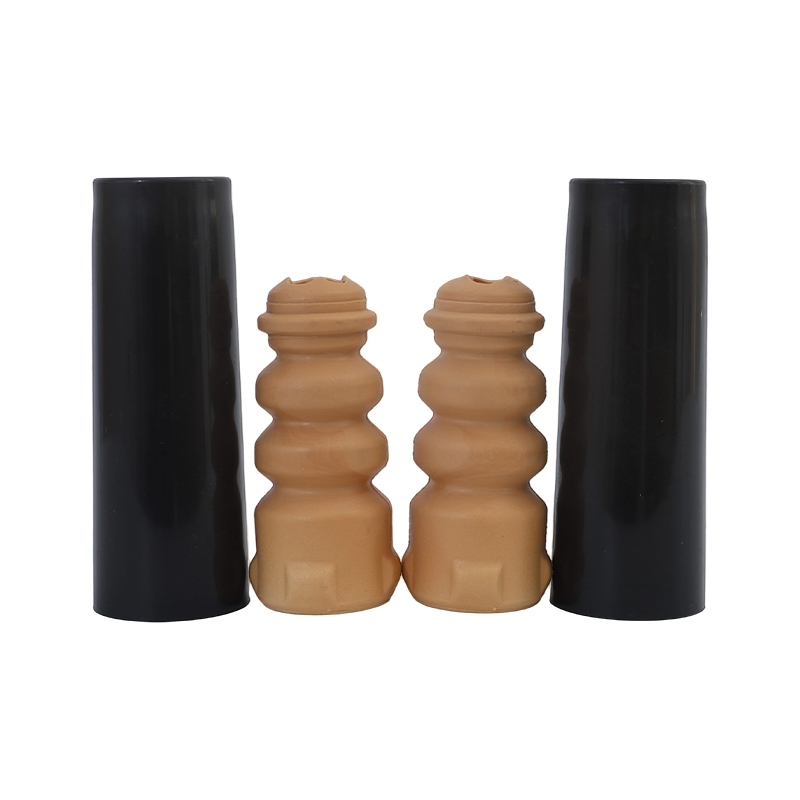
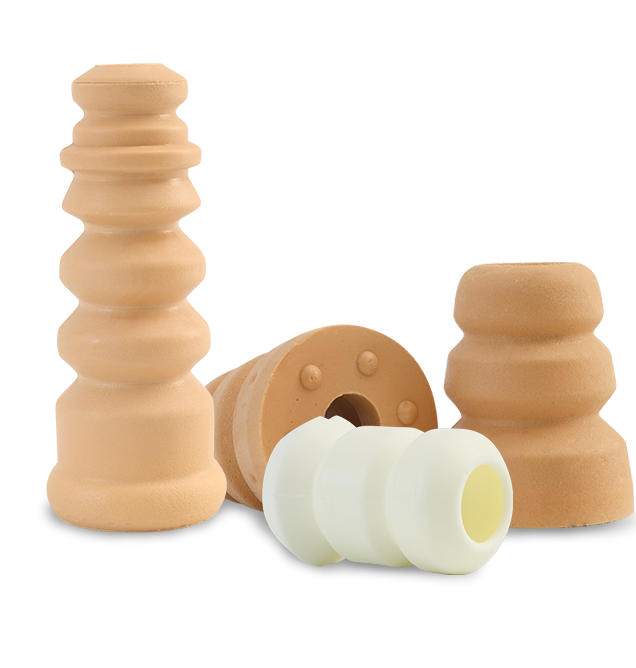
The automobile shock absorber bump stop — also called a jounce bumper — is a compression buffer positioned around or above the shock absorber shaft. Its primary function is to absorb the final, high-energy impact when the suspension reaches the limit of its upward travel (full jounce). Without it, the metal components of the suspension would collide directly, causing severe structural damage and a harsh, jarring impact felt throughout the cabin.
Secondary functions include:
- Acting as a progressive spring rate supplement during extreme compression events
- Reducing noise, vibration, and harshness (NVH) transmitted through the suspension tower
- Protecting the dust boot and shock shaft from contaminants during compression
- Maintaining consistent suspension geometry near full travel
Because it performs a load-bearing function every time the suspension compresses fully — whether hitting a pothole, navigating a speed bump, or braking hard — the automobile shock absorber bump stop accumulates fatigue stress continuously throughout its service life.
Why the Bump Stop Wears Out at the Same Rate as the Shock Absorber
A shock absorber or strut on a passenger vehicle is typically rated for 50,000 to 100,000 miles of service, depending on vehicle type, road conditions, and driving style. The automobile shock absorber bump stop, being manufactured from rubber or polyurethane and subject to the same environmental and mechanical stressors, degrades along a very similar timeline.
Key degradation mechanisms include:
- Compression set: After thousands of compression cycles, rubber loses its ability to fully return to its original shape. A bump stop that has taken a permanent "set" is shorter and softer than designed, reducing its protective range.
- Ozone and UV cracking: Rubber formulations exposed to underbody heat and oxidation develop surface micro-cracks that propagate inward over time, weakening the overall structure.
- Oil contamination: Leaking shock absorber fluid — one of the primary reasons shocks are replaced — saturates and chemically breaks down adjacent rubber components, including the bump stop.
- Thermal cycling: Repeated exposure to temperatures ranging from below -20°C in winter to above 80°C near exhaust components causes expansion and contraction fatigue.
In practical terms, if the shock absorber has failed at 70,000 miles, the automobile shock absorber bump stop at that same corner has absorbed 70,000 miles worth of impacts. Its remaining service life is not reset simply because it has not visibly cracked.
Comparing New vs. Worn Automobile Shock Absorber Bump Stop Performance
| Performance Metric | New Bump Stop | Worn / Degraded Bump Stop |
|---|---|---|
| Energy absorption at full jounce | Full rated capacity | Reduced by 30–60% due to compression set |
| NVH (cabin noise/vibration) | Minimal | Audible clunking or thudding over bumps |
| Protection of strut housing | Effective metal-to-metal barrier | Gap risk; potential strut tower damage |
| Ride quality consistency | Progressive, predictable | Abrupt, harsh at suspension limits |
| Expected remaining service life | 50,000–100,000 miles | Unknown; imminent failure likely |
The Labor Cost Argument: Why Skipping Replacement Costs More
One of the most persuasive practical arguments for replacing the automobile shock absorber bump stop at the same time as the strut is the labor overlap. Accessing the bump stop requires partial or complete disassembly of the strut assembly — the same work already being performed during a shock replacement.
Consider a typical front strut job at an independent workshop:
- Labor to remove and reinstall strut assembly: 1.5 to 2.5 hours per side
- Incremental labor to swap the bump stop while the strut is already disassembled: 5 to 10 minutes
- Cost of the automobile shock absorber bump stop itself: typically $8 to $35 per unit for OEM-equivalent parts
If the bump stop fails six months after the strut replacement, the technician must perform the same full disassembly again — now charging the full labor rate a second time. The total cost of the return visit will typically be three to five times the original cost of simply replacing the bump stop during the initial job.
When Reusing the Automobile Shock Absorber Bump Stop May Be Acceptable
There are limited scenarios where reusing an existing automobile shock absorber bump stop is a reasonable decision:
Low Mileage or Early Replacement
If the shock absorber is being replaced early — for example, due to a collision, manufacturing defect, or as part of a performance upgrade on a vehicle with fewer than 25,000 miles — the bump stop may still retain sufficient elasticity and dimensional integrity for continued use.
Polyurethane Aftermarket Bump Stops
High-quality polyurethane bump stops — common in performance and off-road applications — have a significantly longer service life than standard rubber versions and may outlast two or three shock absorber replacement cycles. If a polyurethane automobile shock absorber bump stop was installed recently and passes inspection, reuse may be appropriate.
Visual and Physical Inspection Criteria
Before deciding to reuse any bump stop, a technician should verify all of the following:
- No visible cracks, tears, or chunking on any surface
- Original height is within 5% of the new-part specification (check OEM service manual)
- No oil saturation or chemical contamination from a leaking shock
- Rubber remains pliable and resilient under manual compression — it should spring back fully within two seconds
- No permanent flat spot or asymmetric deformation
If any one of these criteria is not met, replacement of the automobile shock absorber bump stop is mandatory, not optional.
Should You Replace the Dust Boot at the Same Time?
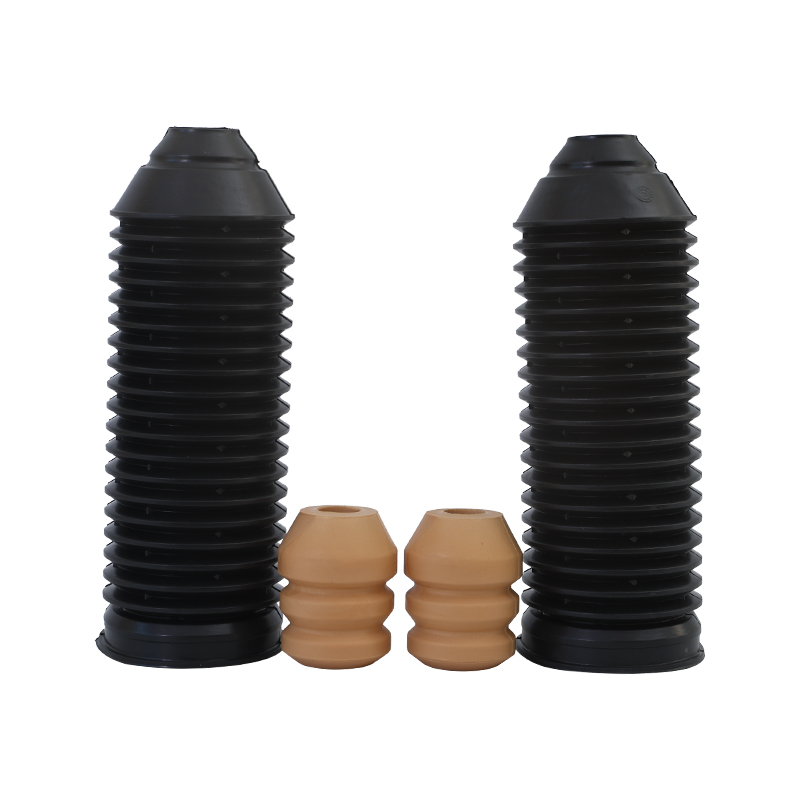
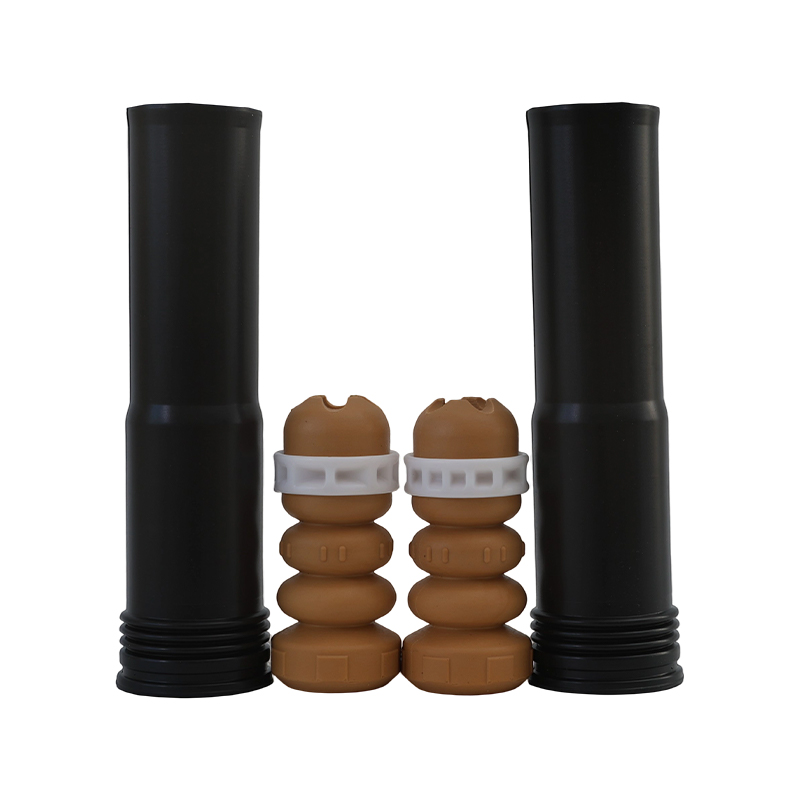
In most strut designs, the automobile shock absorber bump stop and the dust boot are co-located on the shock shaft and are frequently sold as a combined kit. The dust boot, which protects the shock shaft from grit, moisture, and road debris, is made from similarly aging materials and is equally susceptible to cracking and collapse.
Best practice is to replace the bump stop, dust boot, and strut mount bearing (where applicable) as a complete set whenever the strut assembly is serviced. Many aftermarket suppliers package these three components together in a single "strut mount kit" for this exact reason, typically at a 10–20% discount versus purchasing each component individually.
Choosing the Right Replacement Automobile Shock Absorber Bump Stop
When sourcing a replacement, several specification factors must match your vehicle and intended use:
- Free height and compressed height: Must match OEM dimensions to preserve correct suspension travel limits
- Inner bore diameter: Must fit correctly around the shock absorber shaft without binding or excessive play
- Durometer (hardness) rating: A softer bump stop improves ride comfort; a harder one improves load capacity and handling precision — match to your driving requirements
- Material: Standard rubber is appropriate for most passenger vehicles; microcellular polyurethane or foam-cell designs are preferred for performance, off-road, or commercial applications
- OEM cross-reference: Confirm the part number matches your vehicle's year, make, model, trim level, and suspension configuration before purchasing
Final Recommendation
The automobile shock absorber bump stop is an inexpensive component — typically costing less than $35 — that performs a critical protective function within the suspension system. Given that it ages in parallel with the shock absorber, shares the same disassembly labor, and carries a high risk of near-term failure if left unreplaced on a high-mileage vehicle, the professional consensus is clear: replace it every time the shock absorber or strut is replaced, unless the vehicle is low-mileage and the component passes all inspection criteria without exception.
Treating the automobile shock absorber bump stop as a consumable — not an optional add-on — is the standard that protects both the vehicle and the value of the repair work already performed.
.jpg "HP012 Front Shock Absorber Auxiliary Spring Bump Stop for Mercedes-Benz")
.jpg "HP005 Rear Shock Absorber Bump Stop for Ford")
.jpg "HP001 Front Shock Absorber Bump Stop for Chevrolet")
-3.jpg "Are Automotive Bump Stops Necessary? A Comprehensive Guide to Function, Types, and Replacement")
-1.jpg "What is a bump stop in a car, and what is its function in a vehicle's suspension system?")
.jpg "Peugeot Shock Absorber Bump Stop: Function, Replacement, and Common Issues")



